Klout drone digital twin
A digital twin of an emergency-drone fleet over Madrid, built for the HPE CDS Tech Challenge 2025–26, where our team reached the semifinals.
Problem
Phase II of the HPE CDS Tech Challenge 2025–26 asked for an operational digital twin of an emergency-service vehicle. It had to represent the vehicle's state, process telemetry, detect anomalies, run what-if scenarios and be ready to talk to other twins. We had five weeks, from February to March 2026, to build a proof of concept and a five-minute video.
What I built
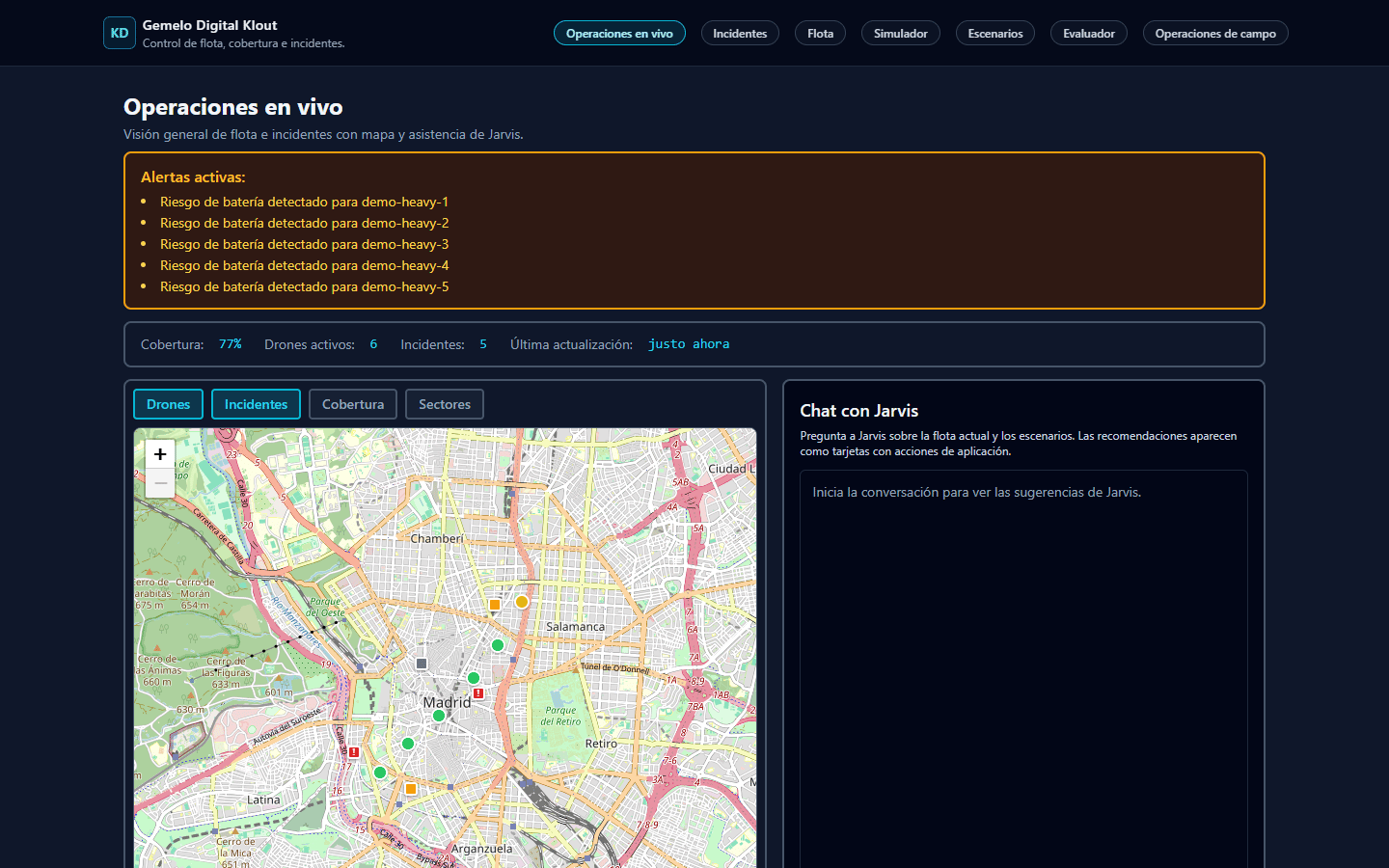
Klout is a digital twin of a fleet of emergency drones over Madrid. Operators see drones, incidents and coverage on a live map; battery, comms and coverage anomalies raise alerts and switch the fleet into a visible degraded mode.
- A seeded telemetry simulator with anomaly presets drives the twin live, so every demo can be reproduced.
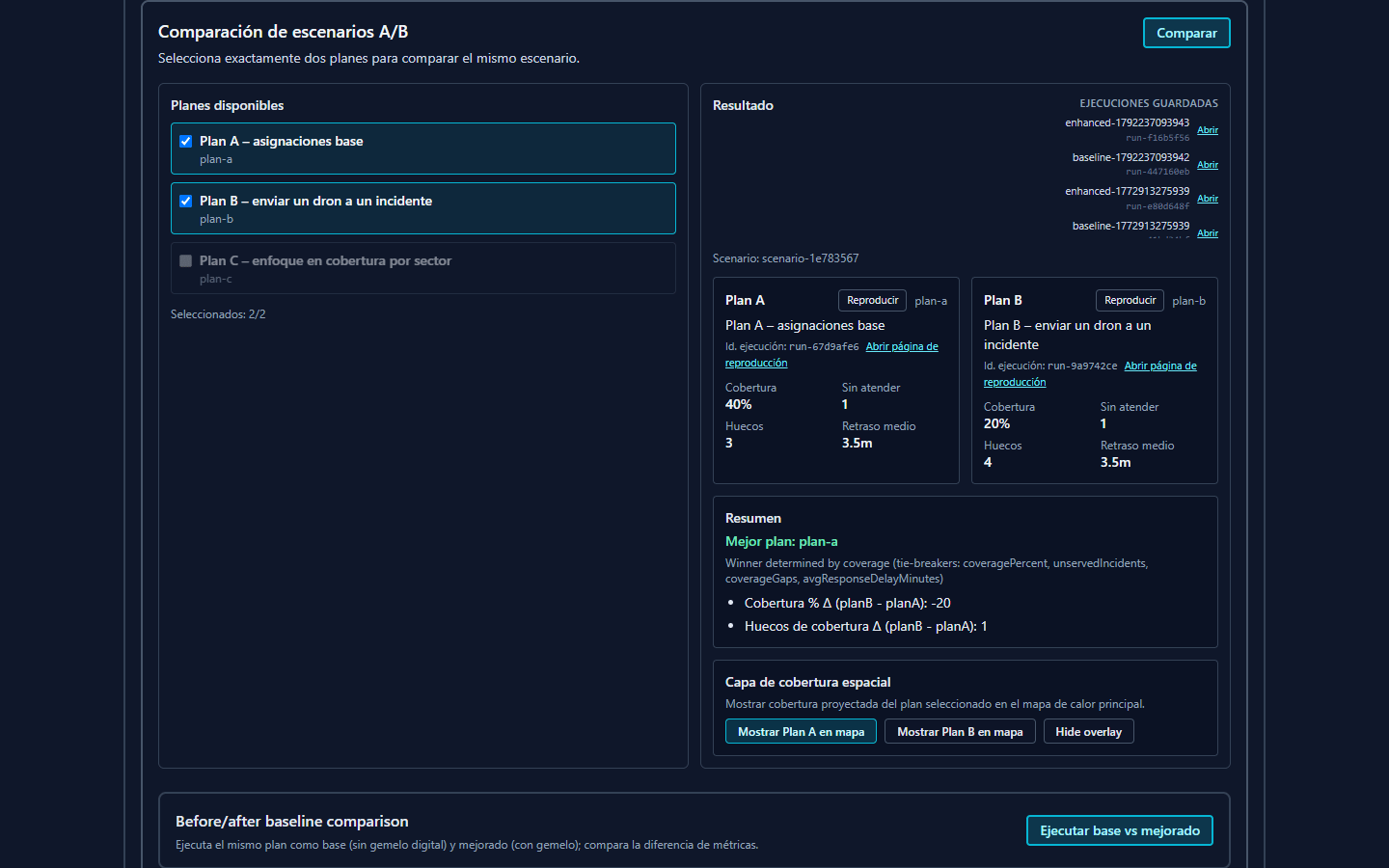
- Response plans can be compared A/B, or baseline against twin-enhanced, on coverage, gaps, unserved incidents and average delay. Runs are saved and can be replayed.
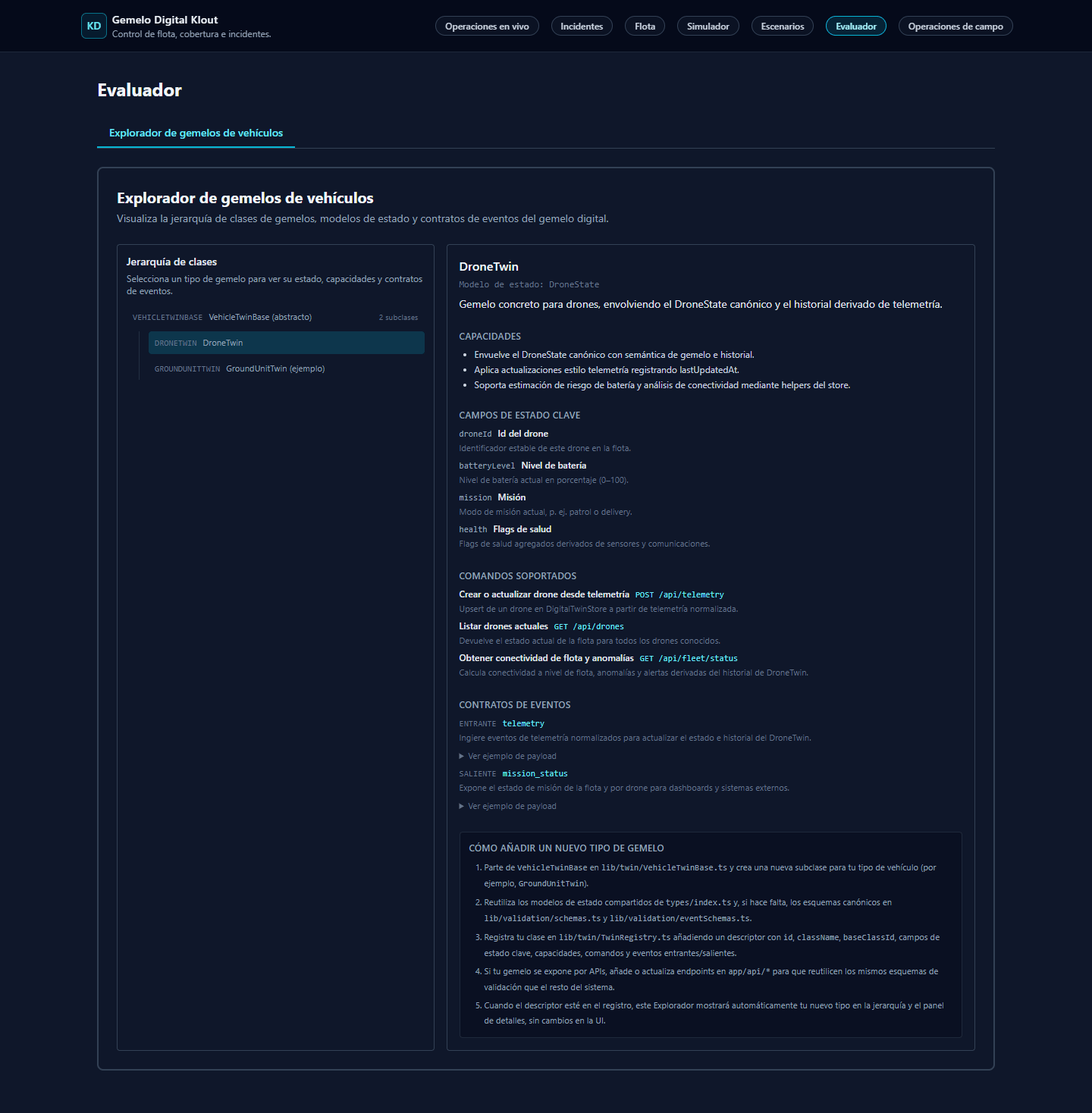
- The twin model is a class hierarchy (a base vehicle twin, a drone twin and a ground-unit example) with documented event contracts, so new twin types can join a network of twins.
- An assistant, Jarvis, answers questions about the fleet and works with OpenAI, Mistral, Gemini or Anthropic, with a fallback when the provider fails.
My role
I led the planning with the BMAD method: product brief, PRD, UX design, architecture and epics. Then I built epics 1 to 4: the project and test setup, the twin core, anomaly detection, simulation and their APIs. I made the most commits on the five-person team (58 of 137). Lucas, Anna, Javier and Arturo built epics 5 to 8, the Spanish interface and the final report.
Stack
Next.js 15, React 19, TypeScript, Tailwind CSS, Zod and Leaflet with a heat-map layer; 28 API routes in one app. Vitest (78 test files) and Playwright for end-to-end tests.
Result
Our team reached the semifinals of the HPE CDS Tech Challenge 2025–26.